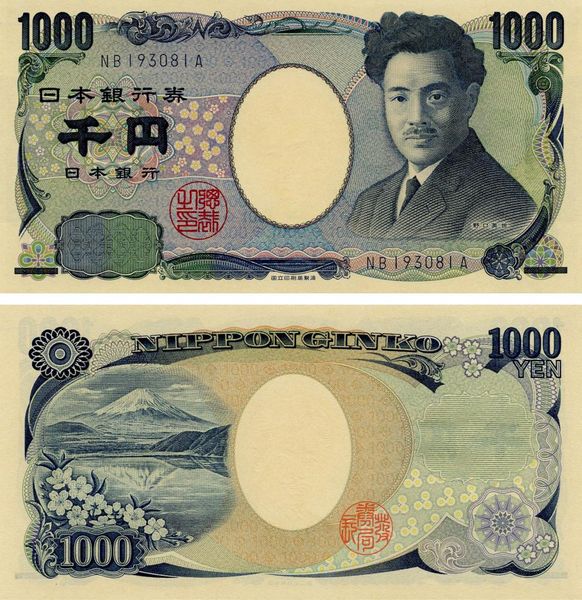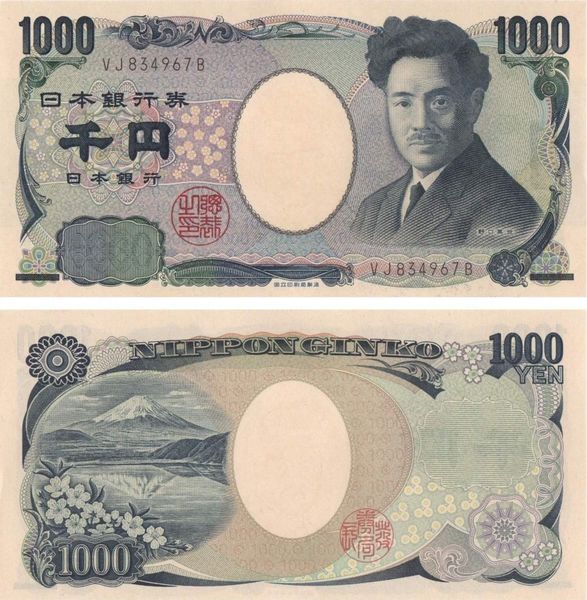
Japan 1000 Yen 2004–2015
The 1000 yen banknote was issued by the Bank of Japan in 2004 as part of Series E. It entered circulation in 2004 and was replaced by Series F in July 2024. It was printed by the National Printing Bureau of Japan and is produced in blue tones.
The obverse features a portrait of Noguchi Hideyo, a distinguished Japanese bacteriologist known for his research into infectious diseases, including yellow fever and syphilis. The reverse depicts Mount Fuji and cherry blossoms in bloom.
Security features include a watermark with a portrait of Noguchi Hideyo, a holographic strip with a colour-shifting effect, intaglio tactile marks, microprinting, and fluorescent elements.
Mount Fuji is the highest peak in Japan and one of the country's foremost national symbols, a UNESCO World Heritage Site. The cherry blossoms embody the Japanese aesthetic of "mono no aware" — the beauty of impermanence. Series E was the last to use the traditional format without 3D holographic elements and remained in circulation for two decades.